Epicel product culture

Using Epicel

Epicel is indicated for adult and pediatric patients who have deep dermal or full thickness burns comprising a total body surface area greater than or equal to 30%

Play

The value of Epicel:
a conversation with Dr. Tracee Short

Play

Sandra J. Yovino MHA, BSN, RN discusses
the role of Epicel in burn care programs

Downloadable surgical resources

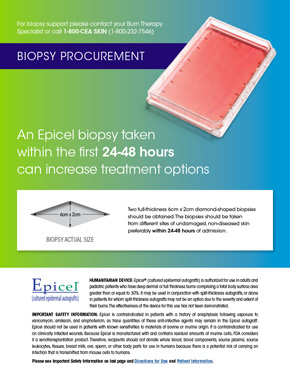
Epicel Biopsy Procurement

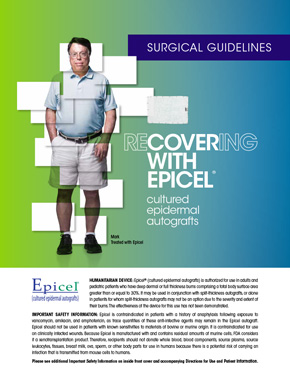
Epicel Treatment & Care Guidelines

Consider Epicel for the following patient types

Large Burns
≥30% TBSA

Use Epicel on top of autograft for superior take rate and durability

Treatment

Apply Epicel over autograft meshed at 4:1– 6:1 ratio for best results in durability, take rate and cosmesis7

Limited Suitable Harvest Sites

Use Epicel to achieve naturalized signalizing using the patient's own skin

Treatment

If no autograft is available, apply Epicel directly over well-engrafted and vascularized allodermis/other dermal substitutes

Autograft for key functional areas

Use Epicel to maximize donor skin for functional areas

Treatment

Use Epicel to conserve autograft for use on critical areas meshed at a lower ratio (face, hands and joints)

Clinical identifiers for the Epicel patient

  • Limited, overtaxed or unsuitable harvest sites, including fragile skin (pediatric, geriatric)
  • Undesirable or limited quality skin (soles of feet, face, scalp, scattered small sites)
  • Concomitant injuries or disease which may impact healing (diabetes mellitus, cardiovascular disease)
  • A history of skin conditions that may impede autograft (skin cancer, psoriasis, eczema, keloid scarring)
  • A need to limit donor reharvesting procedures

Epicel pre-grafting

Use Epicel in conjunction with autograft

Epicel can support the use of wide-mesh autograft from 4:1 up to 6:1

Healing occurs as the meshed autograft spaces fill in with cultured epidermis

A CEA/wide mesh autograft combination may increase the initial durability of Epicel5

Donor sites may also be covered with Epicel to accelerate reharvest potential8
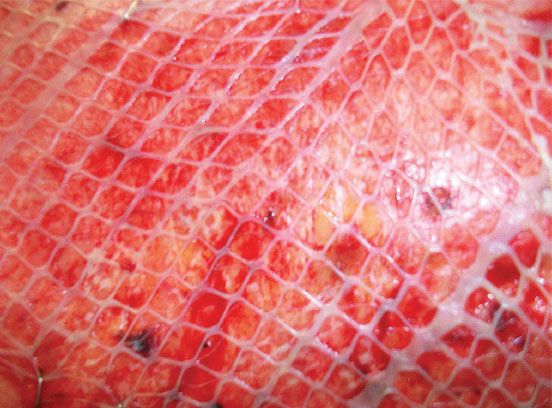
meshed autograft
Widely meshed autograft, prior to placement of Epicel*
graft treatment, 4 months post surgery autograft
Epicel-treated patient
4 months post surgery*

*Individual results may vary.

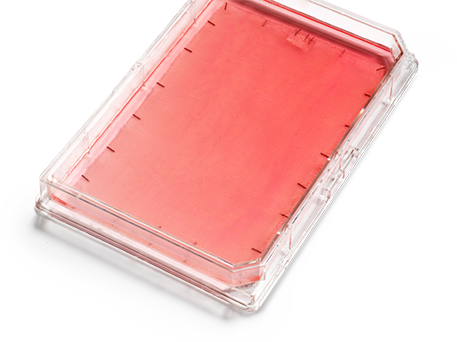
Skin graft dimensions - 6cm x 2cm

Taking an Epicel biopsy within 48 hours of admission can increase the option to use Epicel later in treatment

Taking the Biopsy

The autologous keratinocytes used to prepare Epicel (cultured epidermal autografts) are derived from two small, full-thickness biopsies of skin taken from an unaffected area on the burn patient

Epicel over time

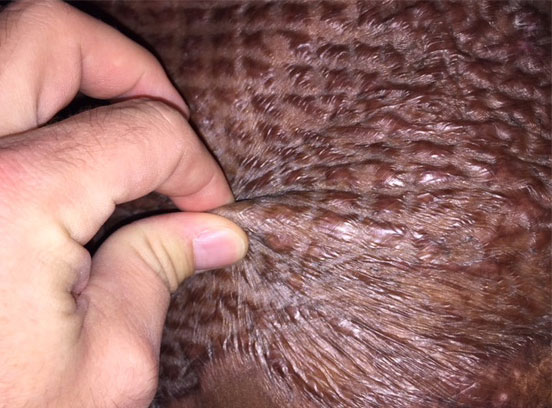
By using a patient's own multi-layer skin, once engrafted
Epicel can provide the patient with functional tissue4
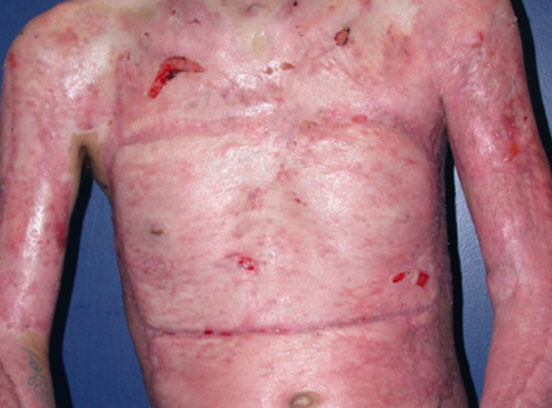
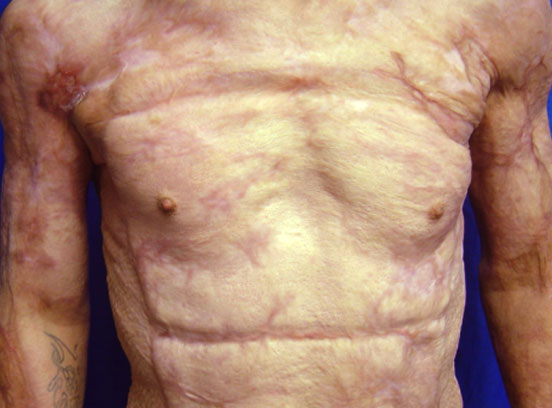
meshed autograft
Epicel-treated patient 2 months post surgery
graft treatment, 4 months post surgery autograft
Epicel-treated patient 12 months post surgery

*Individual results may vary.

A Burn Clincial Specialist and/or Account Manager will be available for surgery

Click Here to Download the Epicel Treatment & Care Guidelines

Play

Epicel: a scientific overview

Specialists are available to answer reimbursement questions about Epicel and the CEA procedure.

Epicel is widely reimbursed and included on a majority of national insurance plans.
Click here to learn more about Epicel reimbursement


Humanitarian Device and Important Safety Information

Important Safety Information

Epicel is contraindicated in patients with a history of anaphylaxis following exposure to vancomycin, amikacin, and amphotericin, as trace quantities of these anti-infective agents may remain in the Epicel autograft.

Humanitarian Device

Epicel (cultured epidermal autografts) is authorized for use in adult and pediatric patients who have deep dermal or full thickness burns comprising a total body surface area greater than or equal to 30%.

Humanitarian Device

Epicel (cultured epidermal autografts) is authorized for use in adult and pediatric patients who have deep dermal or full thickness burns comprising a total body surface area greater than or equal to 30%. It may be used in conjunction with split-thickness autografts, or alone in patients for whom split-thickness autografts may not be an option due to the severity and extent of their burns. The effectiveness of the device for this use has not been demonstrated.

Important Safety Information

Epicel is contraindicated in patients with a history of anaphylaxis following exposure to vancomycin, amikacin, and amphotericin, as trace quantities of these anti-infective agents may remain in the Epicel autograft. Epicel should not be used in patients with known sensitivities to materials of bovine or murine origin. It is contraindicated for use on clinically infected wounds.

Because Epicel is manufactured with and contains residual amounts of murine cells, FDA considers it a xenotransplantation product. Therefore, recipients should not donate whole blood, blood components, source plasma, source leukocytes, tissues, breast milk, ova, sperm, or other body parts for use in humans because there is a potential risk of carrying an infection that is transmitted from mouse cells to humans.

Squamous cell carcinoma (SCC) has been reported in patients with burn injury after being grafted with Epicel. Although SCC is a known complication of burn scars, the role of Epicel in the causation of SCC cannot be excluded.

The Epicel product is intended solely for autologous use. Patients undergoing the surgical procedure associated with Epicel are not routinely tested for transmissible infectious diseases. Discontinue use if the patient shows evidence of allergic reaction.

If clinical signs of infection are present or develop, do not apply Epicel until the infection is adequately treated.

The effectiveness of Epicel has not been proven in clinical studies.

The long-term safety of Epicel is unknown. Over the past 27 years, the mortality from all causes was 13% before hospital discharge.

Men and women who intend to have children should be advised that the effects, if any, of Epicel on fetal development have not been assessed. In addition, the safety of Epicel has not been studied in pregnant and nursing women.

Patient information supplied by attending burn teams from 1989 to 1996 reported the adverse events of highest incidence as: death (13%), infection (13.8%), graft tear (7.8%) or graft blister (4.2%) and drainage (3.3%). Some of these events may have been due to the underlying burn injury and not the device itself.

From June 1998 through September 2015 adverse events received by Genzyme Biosurgery (predecessor in interest to Vericel) and Vericel Corporation were similar to the previously identified adverse events. Events that were reported in ≥ 1% of patients included multi-organ failure (6.6%), sepsis (5.2%) infection (4%) and skin graft failure/graft complication (2.7%). The relationship of these events to Epicel has not been established.

Please see Patient Information and Instructions for Use for more information.